 Katy Shields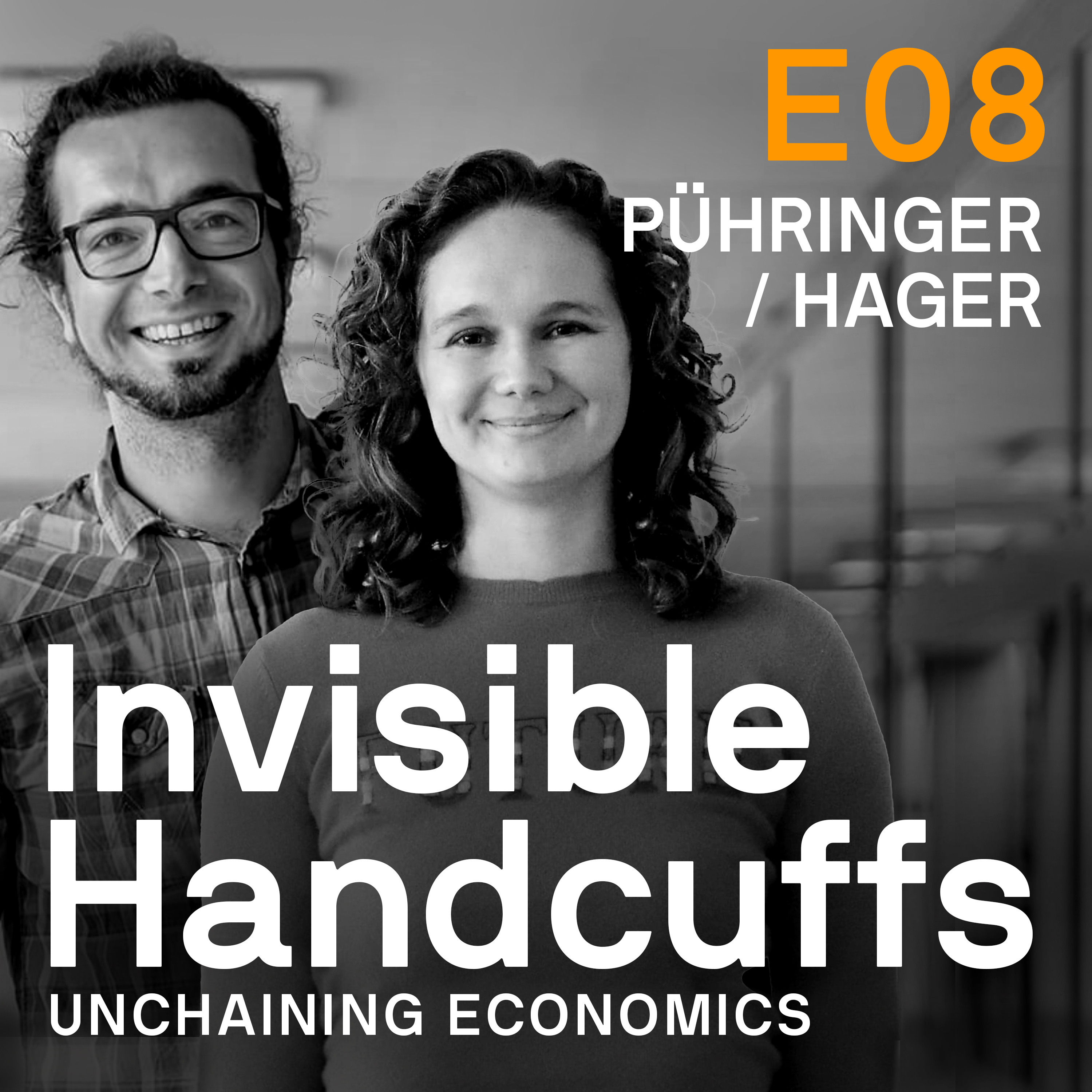
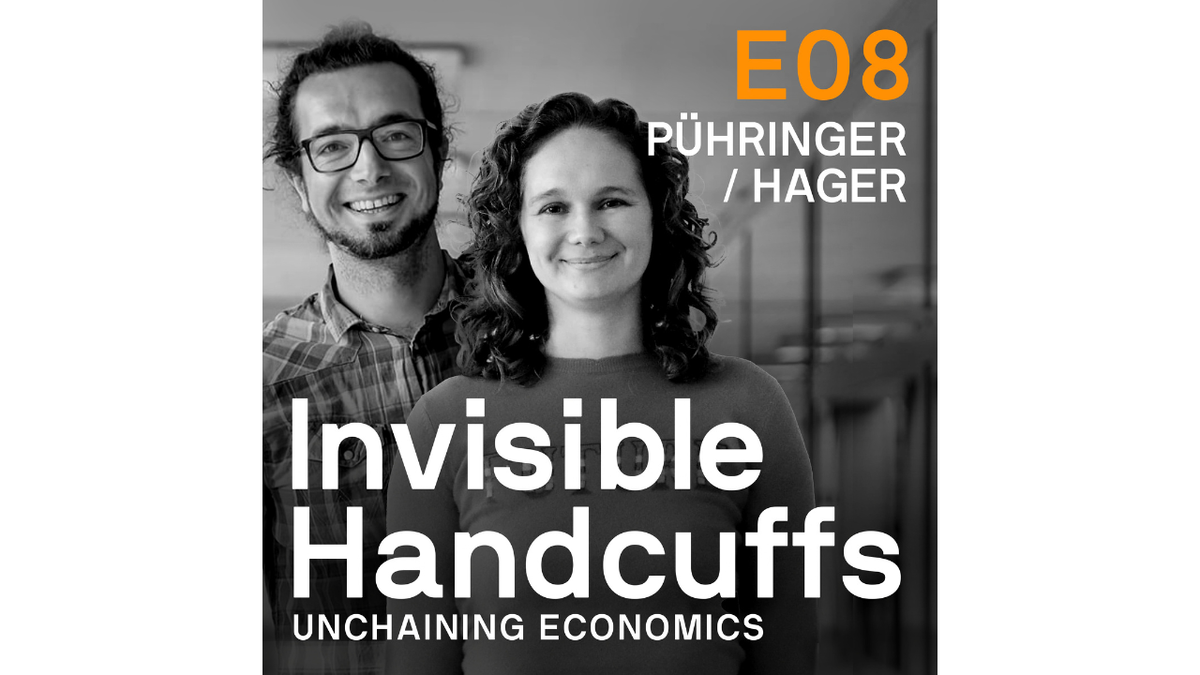
Our guests this episode, which kicks of Season 2, are Stefan Pühringer and Theresa Hager of the Johannes Kepler University in Linz, Austria.
We recorded this conversation at the end of the summer 2026 and are releasing it a few weeks later, during a week in which many European universities are opening their doors for a new wave of students.
Which makes it an apt episode to start with because, it is all about the influence of economics education on our mindsets, on our imaginations, and how this in turn feeds through into what we as a society believe is possible in the face of multiple, overlapping crises — from climate change through to cost-of-living crises and raging inequality.
Stefan and Theresa work across two heterodox institutes: the Institute for the Comprehensive Analysis of the Economy and the Social Ecological Transformation Lab. Both seek to embed economics in society and in ecology, and to explore what both alternative economic approaches as well as other disciplines can offer in meeting today’s challenges.
A common retort by mainstream or neoclassical economists of anyone critiquing their field is that the said critic just doesn’t understand economics. Or indeed, that many of the critiques are only commons to introductory courses and that if you go on to do a masters or a PhD then you would encounter more nuance, more real world tethering.
Well, both Stefan and Theras actually studied neoclassical economics to PhD level and they retained their criticisms so much so that they have effectively dedicated their academic careers to trying to reform economics from the ground up.
Not only do they argue that those more advanced degrees are not necessarily any better are — citing for example the lack of reform since the financial crisis, or the shocking lack of interest in top journals to publishing anything about climate change. But they also argue that those introductory courses — the ones this week and next many young people across Europe and the Northen Hemisphere will be offered not only as part of their economics degrees but perhaps if they are study the humanities, law, accounting, finance even engineering — are actually the most formative. Their own research has shown Economics 101 affects students’ political views and their understanding of societal challenges.
We also address the on-going problem of gender bias in economics with woman and people of a non-male and also non-white, non-middle class background being least represented. About how competition in the higher education system, but in particular in economics, is partly to blame. Women respond differently to the competitive pressure to publish in those top journals. While those who stay and fight their way to the top are often the ones who have, willingly or not, conformed to the neoclassical stereotype. As such, just having a few leading women economists doesn’t necessary mean we’ll see reforms, because they have often been trained in the same neoclassical mindset.
And so we cannot just focus on trying to attract more women into the discipline absent a change in how economics is taught and practiced. If it doesn’t embrace pluralism of thought, and allow for more critical engagement, more critiques of fundamental assupmptions around say the sanctity of economic growth — or capitalism as the only possible system.
This was a really valuable and insightful conversation! If you enjoy it too, please like, share and subscribe (for free or via a paid subscription) to help support our project. We really appreciate it!
————
Resources:
Hager, Theresa; Pühringer, Stephan (2023) : Gendered competitive practices in
economics: A multi-layer model of women's underrepresentation, ICAE Working Paper Series, No.148, Johannes Kepler University Linz, Institute for Comprehensive Analysis of the Economy (ICAE), Linz
https://www.econstor.eu/bitstream/10419/274018/1/1855950596.pdf
Pühringer, Stephan; Bäuerle, Lukas (2018) : What economics education is
missing: The real world, Working Paper Serie, No. Ök-37, Cusanus Hochschule, Institut für
Ökonomie und Institut für Philosophie, Bernkastel-Kues
https://www.econstor.eu/bitstream/10419/196159/1/oek37.pdf
https://www.jku.at/en/institute-for-comprehensive-analysis-of-the-economy/