 Katy Shields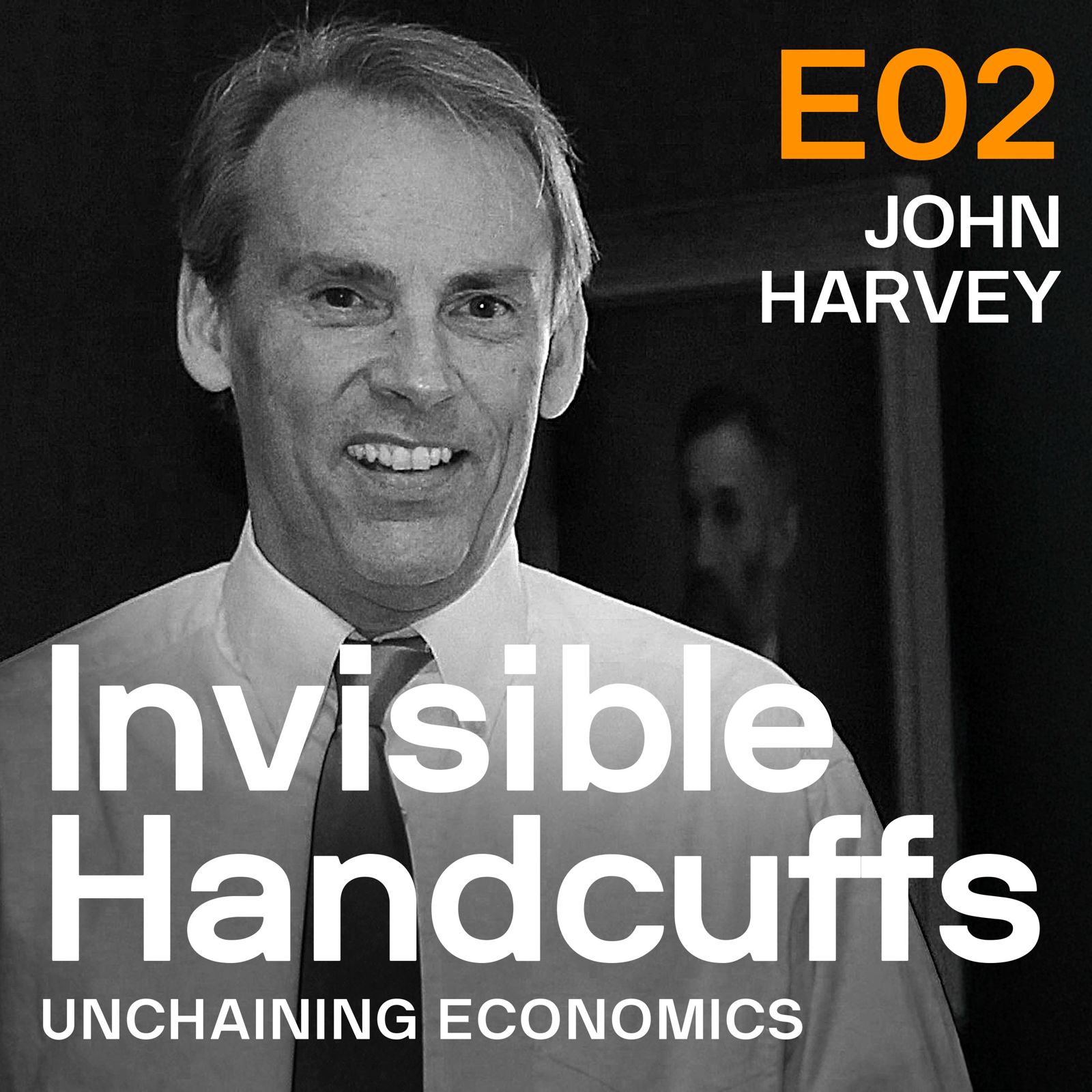
This podcast is all about freeing ourselves from the chains of economic orthodoxy: the set of ideas that drive most decisions in governments, institutions around the world and thus are also underpin our crises.
But where do these ideas come from, and why do they persist? What might alternative schools have to offer? And if such alternative perspectives could offer solutions, why are they not more widely taught?
That is the topic of this week’s discussion with Professor John T Harvey of Texas Christian University. Unlike most economics student John was fortunate enough to have been exposed to a range of thought schools in his own economics education, which, as he explains, made him want to be an economics professor.
He then went on to write a textbook on the various economic thoughts schools, mainly, as he discovered none existed. In this episode we discuss some key schools and how they compare to the 'neoclassical' school, from Marxisim to (post-)Keynesianism, Institutional, Feminist and Ecological Economics.
John makes the point that education, especially in social sciences, should be all about questioning, critiquing, and exploring alternative points of view. Yet in economics, particularly as it is taught in high schools and at undergrad today, there is no such debate.
Students are presented with mathematical models and abstract formulae as if they are natural laws and 'assumptions', like individualism and profit-maximisation, are treated as universal even though they may not reflect the values or cultures of much of the human population. John and I discuss some of the outcomes: disengagement, self-selection bias and an economics which is among the least diverse of any discipline.
We also get into the history of why this is - why, despite growing critiques, neoclassicism persists; the confluence of historical factors and the ways in which various incentive systems, like journal and university rankings, uphold it today.
We end by discussing what can be done, from ensuring that heterodox economists keep fighting to 'keep ideas alive', to the role of student movements, to what we can achieve by engaging directly engaging with decision-makers and the broader public.
Find out more about John's book here: https://www.e-elgar.com/shop/gbp/cont...